

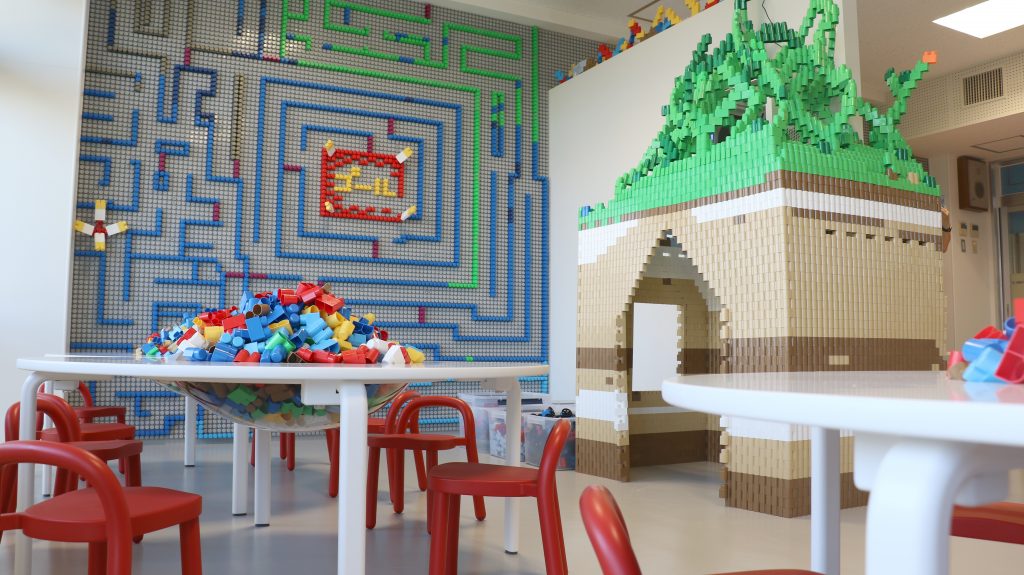
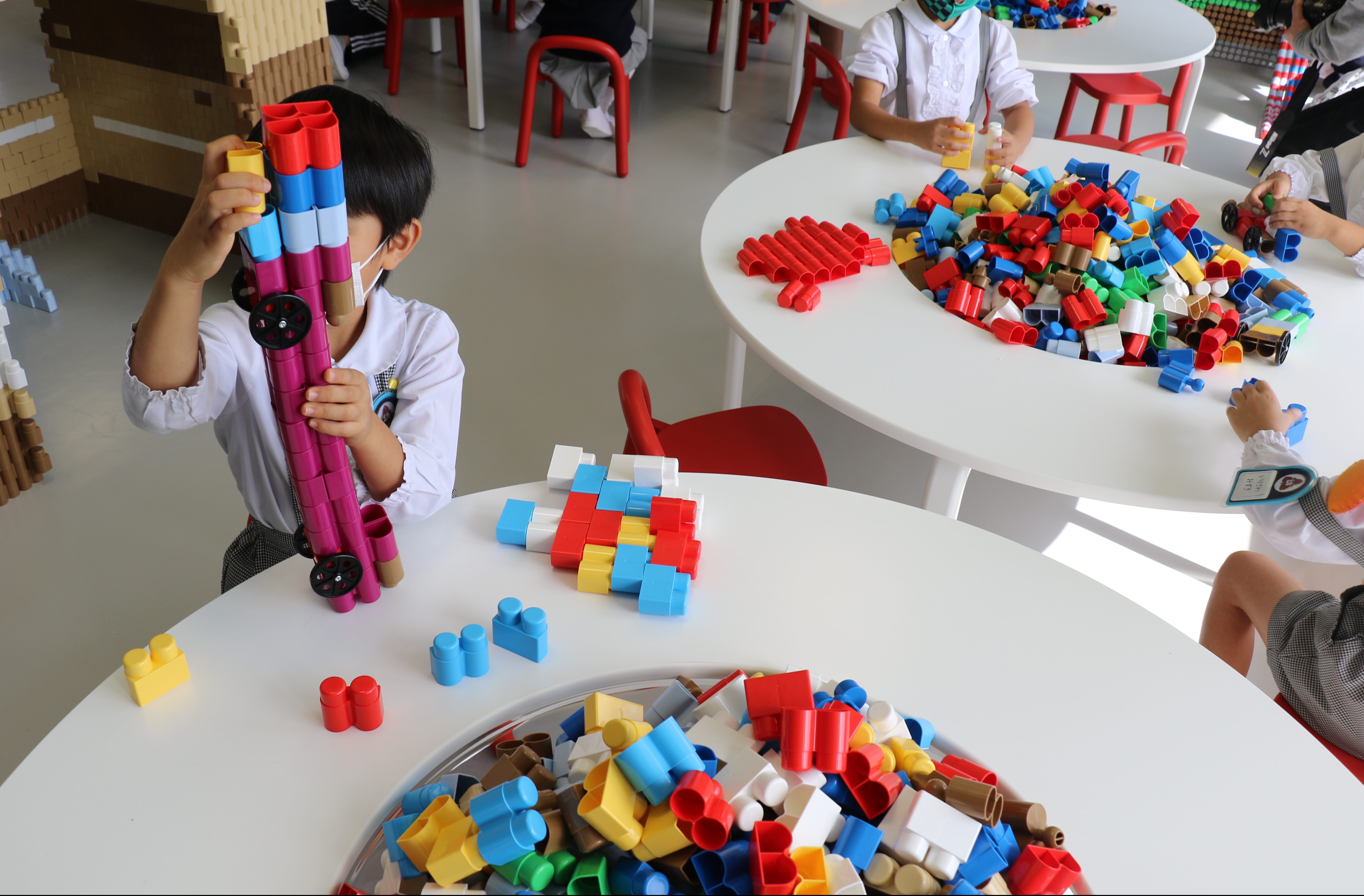
At Sagami Kindergarten, visitors are immediately captivated by the vibrant array of colorful blocks covering the walls and tables of the “B BLOCK Laboratory.”
This bold project transformed an entire classroom into a space for block play, designed to nurture children's intellectual curiosity and non-cognitive skills.
How was this unique space conceived, and how have the children responded to it?
We spoke with Nakatsuka, the project initiator and researcher at the Play Design Lab, and Nobuhide Watanabe, principal of Sagami Kindergarten, about the “B BLOCK Laboratory,” a new initiative born from over 50 years of B BLOCK’s history.
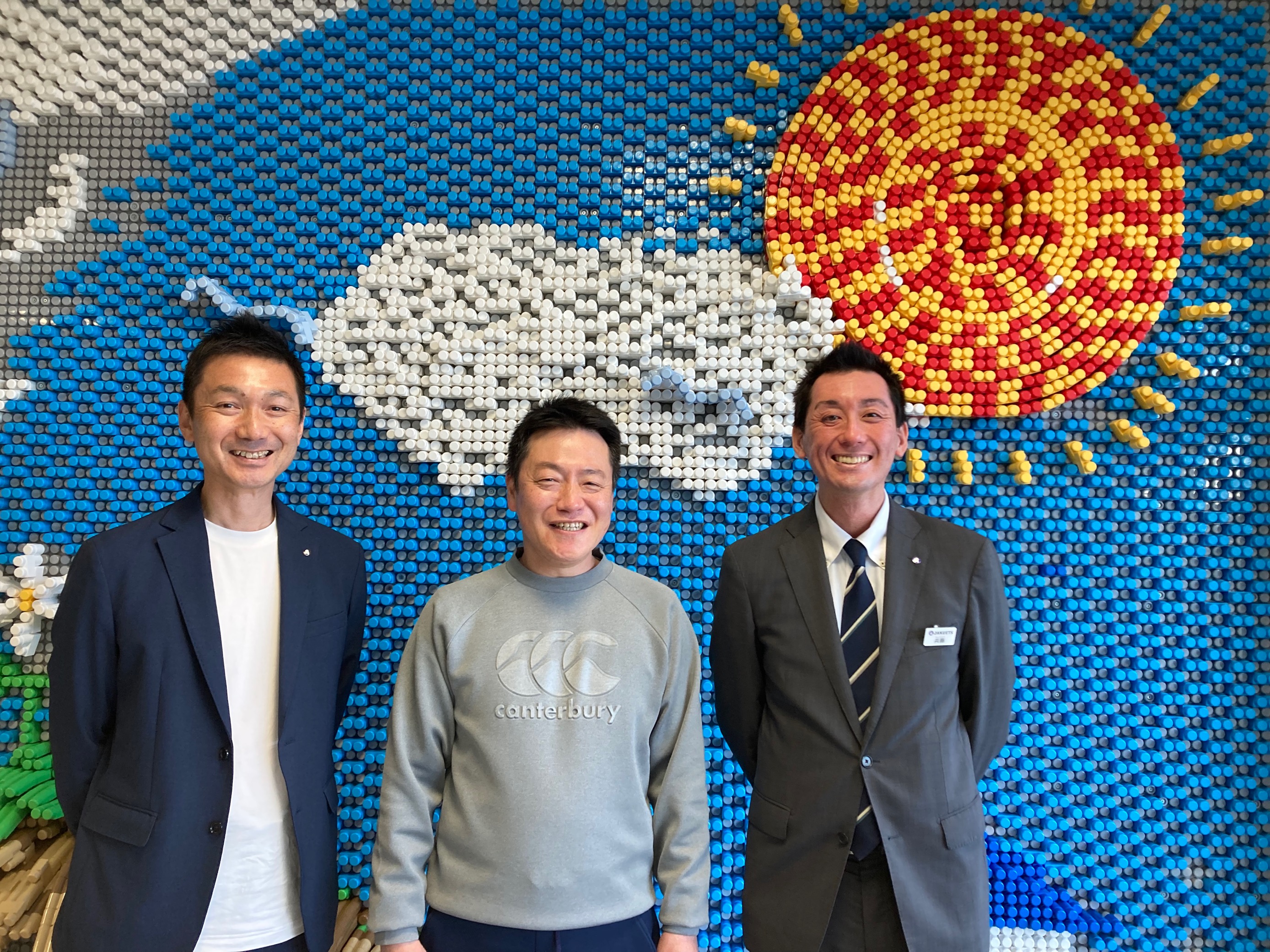
From left: Nakatsuka (Researcher at PLAY DESIGN LAB), Watanabe (Principal, Sagami Kindergarten), Hyodo (Sales, JAKUETS)
Block Play That Nurtures Imagination and Self-expression
―What was the concept behind the “B BLOCK Laboratory”?
Watanabe: The educational philosophy of Sagami Kindergarten is to “play together, learn together, and grow together, so that each child can shine as an individual and develop their potential within the group.” In early childhood education, we view “play” as the foundation for children’s physical and mental development. Through play, we aim to support children’s self-initiated interests and foster their individuality. Under this approach, we sought to create an environment where children could engage in activities that captured their interests and concentrate deeply. With this in mind, we focused on B BLOCK, which was already very popular among the children, and dedicated an entire classroom to block play.
Nakatsuka: Since I loved playing with blocks myself as a child, I was excited by the idea of a room completely filled with blocks. When Watanabe approached me, I thought that by adopting the “laboratory” concept, we could create a space where children could learn through play and develop their non-cognitive skills. To realize this concept, we designed the space as simply as possible, removing anything unnecessary. We also aimed to create a space that stimulates children’s intellectual curiosity by highlighting the vibrant colors of B BLOCK.
―What measures or innovations did you implement when creating the “B BLOCK Laboratory”?
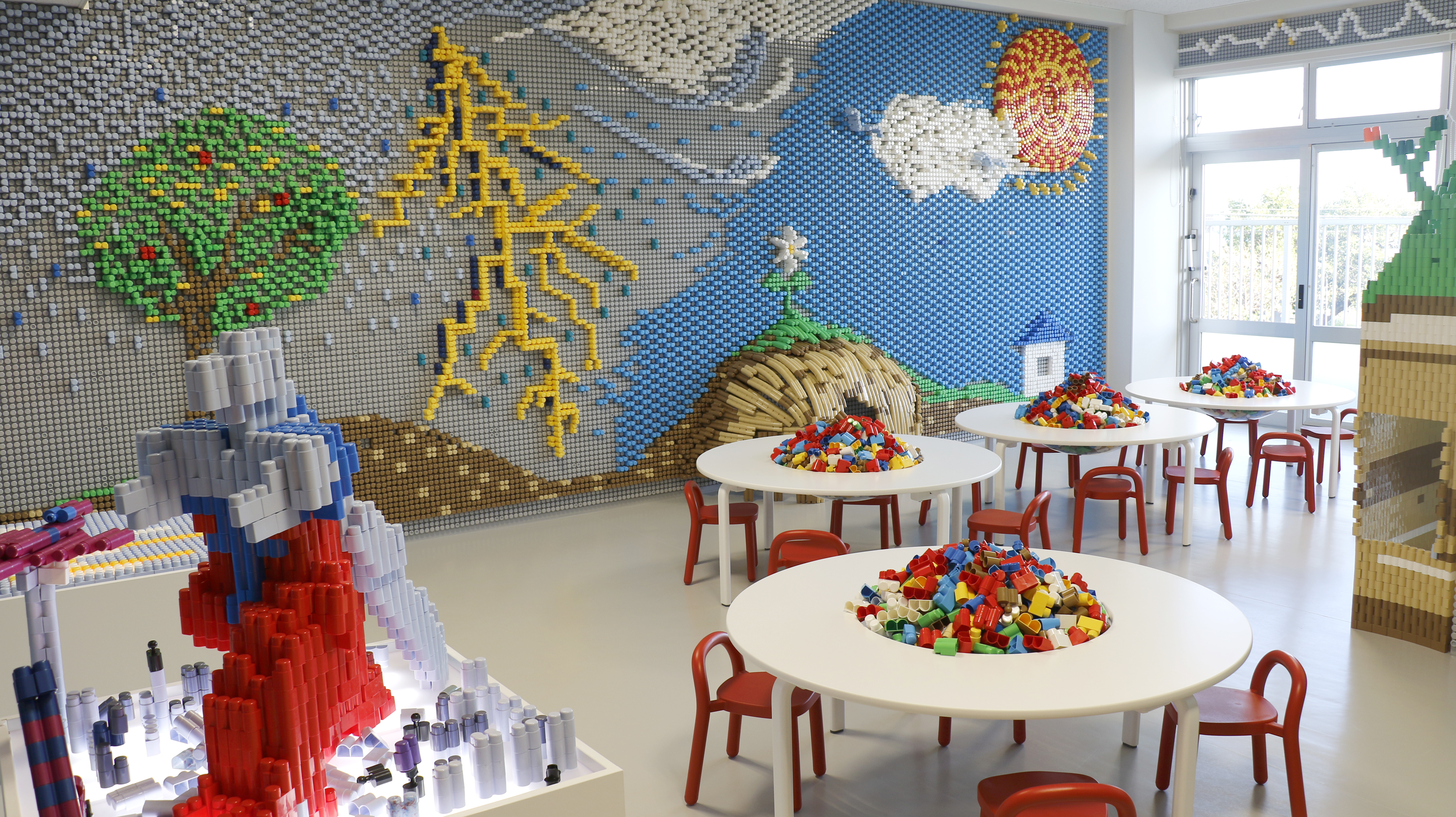
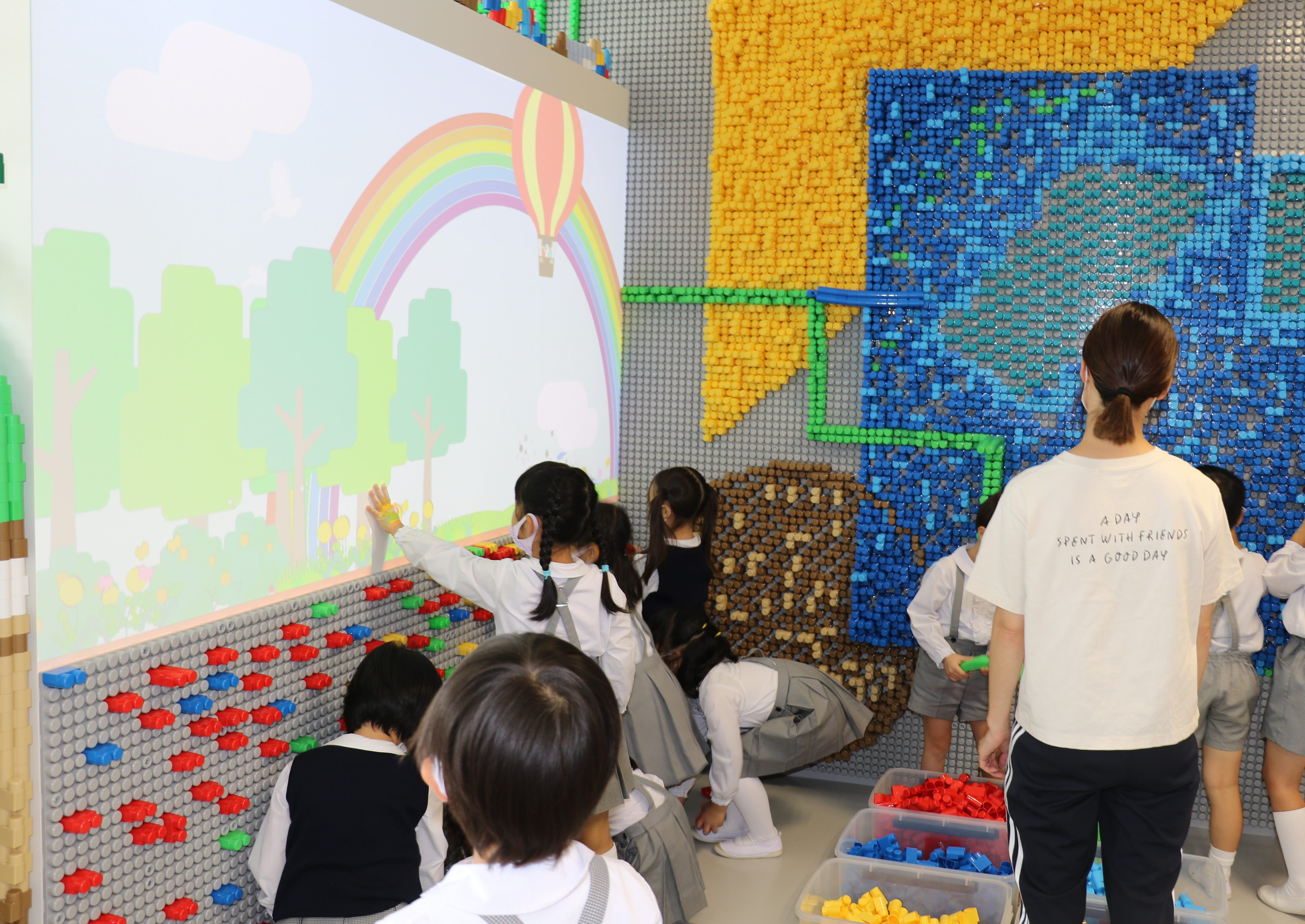
Nakatsuka: First, we introduced a total of 60,000 B BLOCK pieces so that the children could play to their heart's content. To emphasize the “Laboratory” atmosphere, we also implemented a projection mapping system on the walls. This mapping is designed so that the visuals change when children play with the blocks, creating an interactive setup that helps nurture their non-cognitive skills. We deliberately kept the conditions for triggering the visuals loose to encourage children to experiment and think critically; for example, they might wonder, “Why does the red block react, but not the yellow one?” In this way, the setup invites children to think and try things out as they take on challenges. Furthermore, to ensure safe play even during the COVID-19 pandemic, we use flooring made of antibacterial and antiviral materials, and antimicrobial-infused B BLOCK pieces.
Watanabe: Thanks to these efforts, the space has become one where children of all ages can freely use their imagination and enjoy play to their heart's content.
In the B BLOCK Laboratory, each child becomes fully absorbed in their preferred style of play—some working with friends to exchange ideas while creating together, while others quietly focus on completing their creations on their own.
Moreover, because children can leave their unfinished creations in the room, they are now able to take on large-scale projects that previously could not be completed in a single day. I feel that this space has become an important environment where children can develop their imagination and self-expression while further enhancing their spatial awareness through hands-on experimentation and problem-solving.
A Space That Fosters Critical Thinking and Social Development
―What has been the reaction of the children and their parents?
Watanabe: The children absolutely love it! Especially on rainy days, when they cannot play outside, many of them eagerly ask, “Teacher, may we play in the B BLOCK Laboratory?” Some children even cry when their parents come to pick them up, saying they want to stay and continue playing. Creating various works in the classroom has become a great joy for them, and new creations emerge every day.
We have also received positive feedback from parents and teachers, saying that the space stimulates children's imaginations and supports the development of emotional richness, sensitivity, and personal growth. Some visiting parents even remark, their eyes sparkling, “I want to play here too!”
Nakatsuka: I am delighted to hear such positive reactions, as the B BLOCK Laboratory was designed to be a space where I myself would want to play. I am especially glad that we were able to create an environment where children want to keep playing at kindergarten, rather than spending that time feeling lonely while waiting for their parents to pick them up.
―Have you noticed any changes in the children since the B BLOCK Laboratory was established?
Watanabe: I feel that the children are strengthening their thinking skills as they experiment and use their imagination through block play. Also, when they create works together with friends, disagreements or differences of opinion sometimes arise. However, the children actively interact with one another—listening to each other, compromising, and incorporating the good parts of others’ ideas as they work on their creations. Through these lively interactions, they are also cultivating important social skills.
Nakatsuka: In creating the B BLOCK Laboratory, I was once again reminded of the potential of block play. When children fit blocks together and take them apart, they encounter friction and need to use fingertip strength, which helps develop coordination between their fingers and brain while also enhancing fine motor skills. The development of non-cognitive skills is not immediately visible, but we created the B BLOCK Laboratory with the hope that it will benefit the children in the future. I hope it becomes a space that stays in their memories and one that children will remember as adults.
―What are your future initiatives for the B BLOCK Laboratory?
Watanabe:
It might be interesting to invite parents to the B BLOCK Laboratory to create works themselves and then allow the children to view them afterwards. I believe this could also provide an opportunity to foster parent-child communication. Going forward, children will increasingly need the skills to adapt to a new society, including challenges such as environmental issues, advances in AI, and globalization. To help children develop the skills to thrive, we aim to provide them with a wide range of experiences from an early age. For that reason, we intend to further enhance the environment so that children can broaden their horizons and engage in new experiences.